
Table des matières
What Is a Good Credit Score in the UK? Complete Guide for 2026
Focus Keyword: What Is a Good Credit Score in the UK
Thank you for reading this post, don't forget to subscribe!Featured Image Alt Text:
What Is a Good Credit Score in the UK
Introduction
If you’ve ever applied for a credit card, personal loan, mortgage, or mobile phone contract, you’ve probably heard about credit scores. Many people ask, what is a good credit score in the UK, and why does it matter so much?
Your credit score is one of the most important factors lenders consider when deciding whether to approve your application. A strong score can help you access better financial products, lower interest rates, and improved borrowing opportunities.
Understanding what is a good credit score in the UK can help you make smarter financial decisions and improve your financial future.
In this complete guide, you’ll learn how UK credit scores work, what score ranges mean, how to check your credit report, and practical steps to improve your credit rating.

What Is a Credit Score?
A credit score is a numerical representation of your creditworthiness.
Lenders use this score to evaluate how likely you are to repay borrowed money responsibly.
Your credit score is based on information contained in your credit report, including:
- Payment history
- Credit utilization
- Credit account age
- Credit applications
- Existing debts
- Electoral roll registration
When discussing what is a good credit score in the UK, it’s important to understand that different credit reference agencies use different scoring systems.
How Credit Scores Work in the UK
Unlike some countries, the UK does not have one universal credit score.
Three major credit reference agencies collect and maintain credit information:
Experian
One of the largest credit agencies in the UK.
Equifax
Provides credit reports and scoring services.
TransUnion
Offers credit monitoring and credit reporting.
Each agency may display slightly different scores because they use different calculation methods.
However, lenders usually review your complete credit profile rather than relying solely on one number.
What Is a Good Credit Score in the UK?
The answer depends on which credit reference agency you’re using.
Experian Score Ranges
- Very Poor: 0–560
- Poor: 561–720
- Fair: 721–880
- Good: 881–960
- Excellent: 961–999
Equifax Score Ranges
- Poor: 0–438
- Fair: 439–530
- Good: 531–670
- Very Good: 671–810
- Excellent: 811–1000
TransUnion Score Ranges
- Very Poor: 0–550
- Poor: 551–565
- Fair: 566–603
- Good: 604–627
- Excellent: 628–710
Generally speaking, a score that falls within the “Good” or higher category is considered a good credit score.
Understanding what is a good credit score in the UK helps you evaluate where you currently stand and what improvements may be necessary.
Why Does Your Credit Score Matter?
Your credit score influences many aspects of your financial life.
Credit Card Applications
Higher scores often improve approval chances.
Personal Loans
Lenders may offer lower interest rates to applicants with stronger credit profiles.
Mortgages
A good score can increase mortgage eligibility and improve borrowing terms.
Mobile Phone Contracts
Telecom providers may review your credit history before approval.
Rental Applications
Some landlords perform credit checks before accepting tenants.
This is why understanding what is a good credit score in the UK is essential for long-term financial success.
Factors That Affect Your Credit Score
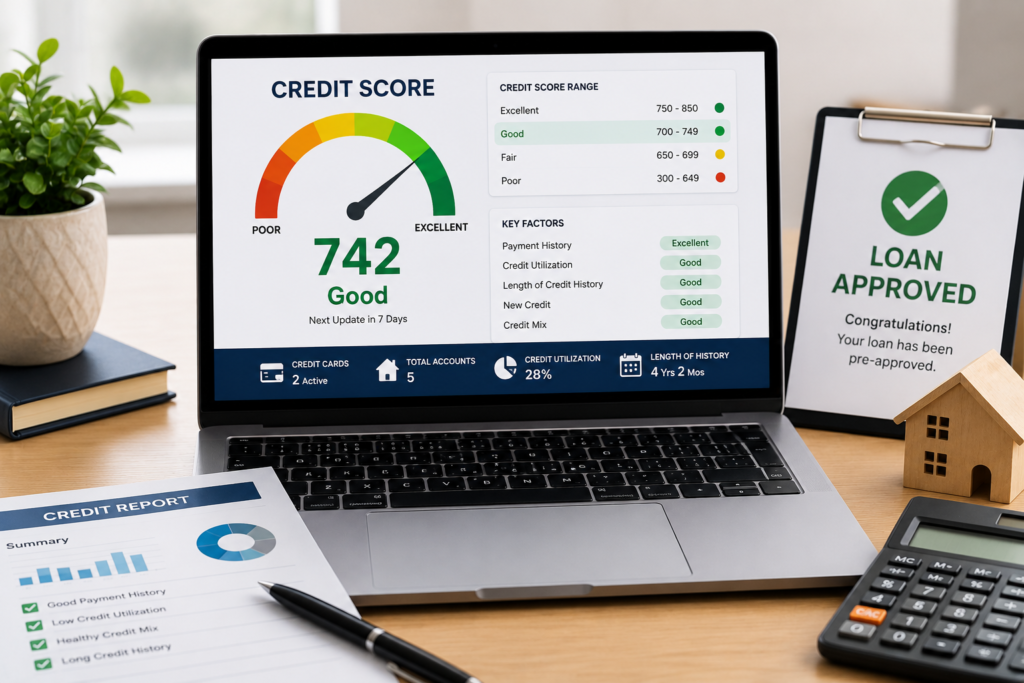
Several factors influence your credit score.
Payment History
Paying bills on time is one of the most important factors.
Late payments can negatively impact your score.
Credit Utilization
This refers to how much of your available credit you’re using.
Keeping utilization below 30% is generally recommended.
Length of Credit History
Older accounts often contribute positively to your credit profile.
Credit Applications
Too many applications within a short period can lower your score temporarily.
Public Records
Bankruptcy or County Court Judgments (CCJs) can significantly affect credit ratings.
How to Check Your Credit Score
Checking your credit score regularly helps you monitor progress and identify issues.
You can check your credit report through:
Experian:
https://www.experian.co.uk
Equifax:
https://www.equifax.co.uk
TransUnion:
https://www.transunion.co.uk
Reviewing your report regularly can help detect errors and fraudulent activity.
Common Reasons for a Low Credit Score
Many people have lower scores without realizing why.
Common reasons include:
- Missed payments
- High credit card balances
- Multiple credit applications
- Limited credit history
- Errors on credit reports
- Defaulted accounts
Fortunately, most credit score issues can be improved over time.
How to Improve Your Credit Score
One of the most common questions after learning what is a good credit score in the UK is how to improve it.
Pay Bills on Time
Set up direct debits whenever possible.
Register on the Electoral Roll
This helps verify your identity and address.
Reduce Credit Utilization
Avoid using too much of your available credit.
Avoid Unnecessary Applications
Only apply for credit when necessary.
Monitor Your Credit Report
Check for inaccuracies and dispute errors promptly.
Keep Older Accounts Open
Longer credit histories can strengthen your profile.
How Long Does It Take to Improve a Credit Score?
Improving your credit score takes time and consistency.
Minor improvements may appear within a few months.
Significant improvements may require six months to several years, depending on your situation.
Patience and responsible credit management are essential.
Good Credit Score vs Excellent Credit Score
Many people wonder whether a good score is enough.
A good credit score often provides access to many financial products.
However, an excellent score may unlock:
- Lower interest rates
- Better credit card offers
- Higher borrowing limits
- More favorable mortgage terms
Both categories are generally considered positive by lenders.
Credit Score Myths
Myth 1: Checking Your Score Hurts It
Checking your own report is usually considered a soft search and does not affect your score.
Myth 2: Income Determines Your Score
Income may influence lending decisions but is not directly part of your credit score.
Myth 3: Closing Accounts Always Improves Credit
Closing older accounts can sometimes reduce your average credit history length.
Helpful Financial Resources
MoneyHelper UK:
https://www.moneyhelper.org.uk
Financial Conduct Authority:
https://www.fca.org.uk
Experian UK:
https://www.experian.co.uk
These trusted resources provide additional guidance on credit management and financial planning.
Internal Linking Opportunities
Link to related articles:
- How to Improve Your Credit Score
- Best Cashback Credit Cards in the UK for 2026
- Personal Finance for Beginners UK
- Bases du score de crédit
- Budgeting Tips for Beginners
Frequently Asked Questions
What Is a Good Credit Score in the UK?
A score within the “Good” or higher range according to your credit agency is generally considered positive.
Can I Get Approved with a Fair Credit Score?
Yes, although approval terms may be less favorable.
How Often Should I Check My Credit Report?
At least several times per year.
Does Paying Off Debt Improve My Score?
In many cases, reducing debt can positively affect your credit profile.
Final Thoughts
Understanding what is a good credit score in the UK is one of the most important steps toward better financial health.
A strong credit score can improve access to loans, credit cards, mortgages, and many other financial opportunities.
By paying bills on time, reducing debt, managing credit responsibly, and regularly monitoring your credit report, you can steadily improve your score over time.
Conclusion
If you’ve been wondering what is a good credit score in the UK, the answer depends on the credit agency being used, but generally a score classified as “Good” or above is considered favorable.
Building and maintaining a strong credit score requires patience, consistency, and responsible financial habits.
Start improving your credit profile today and enjoy the long-term benefits of better borrowing opportunities and greater financial confidence.