
Table des matières
How to Build an Emergency Fund from Scratch
Thank you for reading this post, don't forget to subscribe!
Introduction
Unexpected expenses can happen at any time. Your car might need repairs, you could face a medical emergency, or you might lose your job unexpectedly. Without savings, these situations can quickly become stressful and expensive.That’s why learning how to build an emergency fund from scratch is one of the most important financial skills you can develop.An emergency fund acts as a financial safety net, helping you cover unexpected expenses without relying on credit cards or loans. Whether you’re just starting your financial journey or trying to improve your money management skills, this guide will show you exactly how to build an emergency fund from scratch and create long-term financial security.
In today’s uncertain economy, having emergency savings is more important than ever. Rising living costs, inflation, and unexpected life events can quickly disrupt even the most carefully planned budget. Building an emergency fund gives you flexibility and confidence, allowing you to handle financial setbacks without panic.
What Is an Emergency Fund?
An emergency fund is money set aside specifically for unexpected financial situations.
Examples include:
- Job loss
- Medical expenses
- Car repairs
- Home maintenance emergencies
- Unexpected travel costs
- Essential household repairs
The purpose of an emergency fund is to protect your finances during difficult times.When you understand how to build an emergency fund from scratch, you gain peace of mind knowing that you’re prepared for life’s surprises.Unlike savings for holidays, gadgets, or home improvements, an emergency fund should only be used when absolutely necessary. Think of it as your personal financial insurance policy that protects you from falling into debt when unexpected expenses arise.
Why Is an Emergency Fund Important?
Many people underestimate the importance of emergency savings until they face a financial crisis.
Benefits include:
- Reduced financial stress
- Less dependence on debt
- Improved financial stability
- Better money management habits
- Greater confidence in handling emergencies
Without an emergency fund, many individuals rely on high-interest credit cards, which can create long-term financial problems.Learning how to build an emergency fund from scratch helps you avoid this situation.An emergency fund also provides emotional benefits. Financial worries are one of the leading causes of stress. Knowing you have money available for emergencies can improve your mental wellbeing and help you make better financial decisions.
How Much Should You Save?
Financial experts commonly recommend saving:
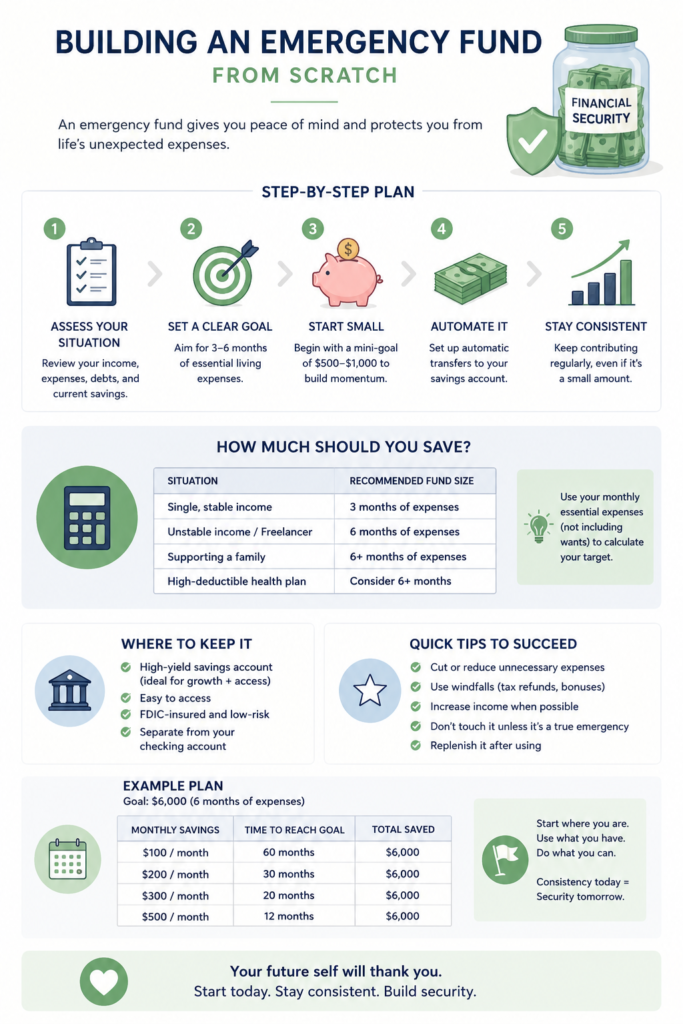
- 3 months of essential expenses for stable employment
- 6 months of expenses for added security
- 9–12 months if you’re self-employed or have irregular income
For example:
If your monthly essential expenses are £1,500:
- 3 months = £4,500
- 6 months = £9,000
Don’t let these numbers overwhelm you.
The key to learning how to build an emergency fund from scratch is starting small and building consistently.Remember that your target amount may change over time. If your expenses increase due to a new home, family responsibilities, or lifestyle changes, review your emergency fund goal annually to ensure it remains adequate.
Step 1: Calculate Your Essential Expenses
Before saving, identify your essential monthly costs.
Include:
- Rent or mortgage
- Utilities
- Food
- Insurance
- Transportation
- Minimum debt payments
Avoid including:
- Luxury spending
- Entertainment subscriptions
- Non-essential shopping
Knowing your expenses helps determine your emergency fund target.
Creating a detailed budget can make this process easier. Review your bank statements from the last three months and identify recurring expenses. This exercise often reveals spending patterns and opportunities to save more money.
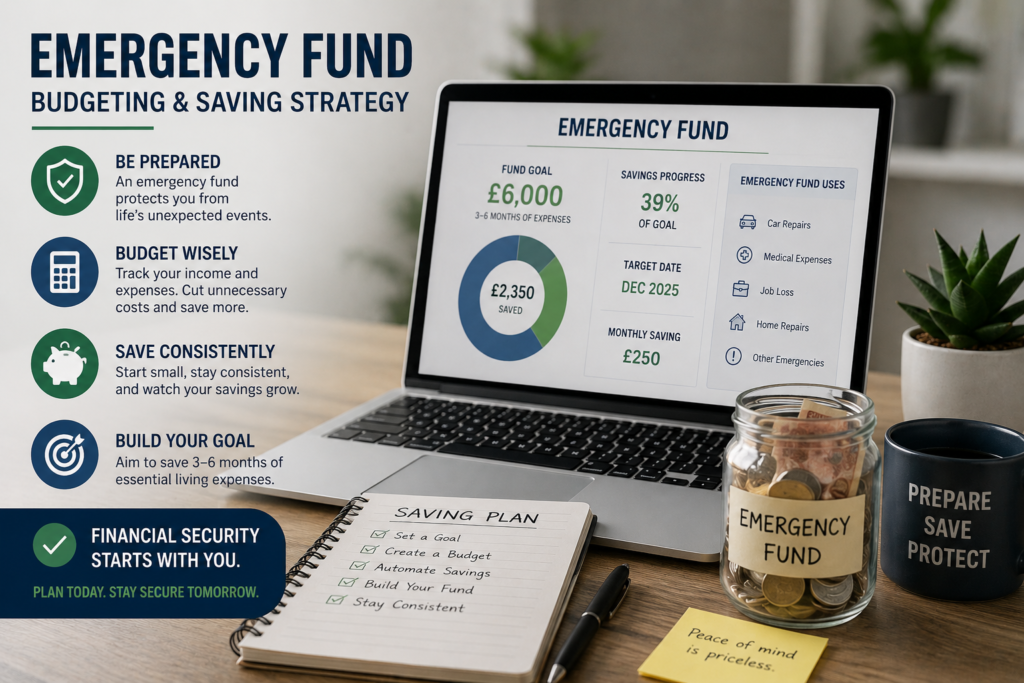
Emergency fund budgeting and saving strategy
Step 2: Set a Realistic Savings Goal
Many people fail because they aim too high too quickly.
Instead of focusing on £5,000 or £10,000 immediately, aim for:
- First £100
- Then £500
- Then £1,000
Small milestones create motivation and momentum.One of the best ways to learn how to build an emergency fund from scratch is to celebrate each milestone.You can even create a visual savings tracker to monitor your progress. Seeing your savings grow can encourage you to stay committed to your goal.
Step 3: Create a Dedicated Savings Account
Keeping emergency savings separate from your everyday spending account reduces temptation.
Consider:
- High-interest savings accounts
- Easy-access savings accounts
- Online savings platforms
Your emergency fund should remain accessible but not too easy to spend.Many banks now offer savings accounts with competitive interest rates. While earning interest shouldn’t be your primary goal, every extra pound earned helps your emergency fund grow faster.
Step 4: Automate Your Savings
Automation removes the need for willpower. Set up an automatic transfer every payday.
Examples:
- £25 per week
- £50 per week
- £100 per month
Consistent contributions make a huge difference over time.Treat your savings contribution like any other essential bill. By paying yourself first, you ensure that saving becomes a regular habit rather than an afterthought.
Step 5: Reduce Unnecessary Expenses
Look for spending that can be reduced temporarily.
Examples include:
- Unused subscriptions
- Excess dining out
- Impulse purchases
- Premium memberships
Even saving £50 per month can significantly accelerate your emergency fund growth.
Consider conducting a monthly spending audit. Review every expense and ask yourself whether it adds genuine value to your life. Small adjustments can free up significant amounts of money over time.
Step 6: Increase Your Income
Another effective strategy for how to build an emergency fund from scratch is increasing your income.
Consider:
- Freelancing
- Selling unused items
- Online side hustles
- Part-time work
- Consulting services
Direct any extra income straight into your emergency savings account.
Many people find that combining increased income with reduced spending dramatically speeds up their savings progress. Even a few extra hours of work each week can make a noticeable difference.
Step 7: Use Windfalls Wisely
Whenever you receive unexpected money, consider allocating a portion to your emergency fund.
Examples include:
- Tax refunds
- Work bonuses
- Cash gifts
- Cashback rewards
This can dramatically speed up your progress.
A useful strategy is the 50/50 rule. Allocate half of any windfall to your emergency fund and use the remaining half for personal goals or enjoyment. This approach helps maintain motivation while still prioritising financial security.
Step 8: Avoid Common Mistakes
Many beginners make mistakes that slow down their progress.
Common mistakes include:
Using Savings for Non-Emergencies
A holiday is not an emergency.
A new phone is not an emergency.
Protect your emergency fund for genuine financial emergencies only.
Setting Unrealistic Goals
Large goals can feel discouraging.
Focus on small, achievable milestones.
Ignoring Budget Reviews
Review your budget regularly to identify additional saving opportunities.
Not Replenishing the Fund
If you need to use your emergency savings, make rebuilding the fund a priority. An emergency fund only works when money is available for future emergencies.
Step 9: Track Your Progress
Monitoring progress helps maintain motivation.
Track:
- Current balance
- Monthly contributions
- Savings milestones
- Percentage of target completed
Watching your emergency fund grow can be highly motivating.
Many budgeting apps and banking platforms offer savings tracking tools that make monitoring progress simple and convenient.
Building an Emergency Fund on a Low Income
Many people believe they cannot save because their income is too low. However, learning how to build an emergency fund from scratch is possible regardless of income level.Start with very small amounts if necessary. Saving just £5 or £10 per week may seem insignificant, but consistency matters more than the amount. Over a year, these small contributions can add up to hundreds of pounds.Focus on building the habit first. Once saving becomes automatic, increasing contributions becomes much easier as your financial situation improves.
Best Places to Keep an Emergency Fund
Ideal options include:
- Easy-access savings accounts
- High-yield savings accounts
- Cash ISAs (where appropriate)
Avoid:
- Actions
- High-risk investments
- Cryptocurrency
Emergency funds should prioritize safety and accessibility over returns.
The primary purpose of an emergency fund is protection, not growth. Therefore, preserving your capital should always be the top priority.
Emergency Fund vs Investing
Many beginners ask whether they should invest or build an emergency fund first.
Generally:
- Build an emergency fund.
- Pay off high-interest debt.
- Begin long-term investing.
Having emergency savings helps prevent you from selling investments during market downturns.Investing can help build wealth over time, but investments can fluctuate in value. An emergency fund provides stability and ensures you have immediate access to cash when needed.
Helpful Financial Resources
For additional financial guidance, visit:
MoneyHelper UK:
https://www.moneyhelper.org.uk
Financial Conduct Authority:
https://www.fca.org.uk
Experian UK:
https://www.experian.co.uk
These trusted resources provide valuable information about saving, budgeting, and financial planning.
Internal Linking Opportunities
Link to related articles:
- Personal Finance for Beginners UK
- How to Create a Monthly Budget
- Best Money-Saving Tips
- How to Improve Your Credit Score
- Investing for Beginners
Final Thoughts
Learning how to build an emergency fund from scratch is one of the most important steps toward financial security.You don’t need thousands of pounds to start. What matters most is consistency.Start with a small goal, automate your savings, reduce unnecessary expenses, and track your progress regularly.
Over time, your emergency fund will grow and provide protection against unexpected financial challenges.
The sooner you begin, the sooner you’ll enjoy greater peace of mind, financial confidence, and long-term stability.
Remember that building an emergency fund is a journey, not a race. Every pound saved brings you one step closer to financial resilience. Stay patient, remain consistent, and trust the process.
Conclusion
If you’ve been wondering how to build an emergency fund from scratch, the answer is simple: start today.
Even small contributions can create meaningful results over time.
Focus on building the habit first, and the savings will follow.
By taking action now, you’ll create a financial cushion that protects you from life’s uncertainties and helps you achieve greater financial freedom in the future.