How to Improve Your Credit Score Fast in the UK?: A Practical Guide for 2026
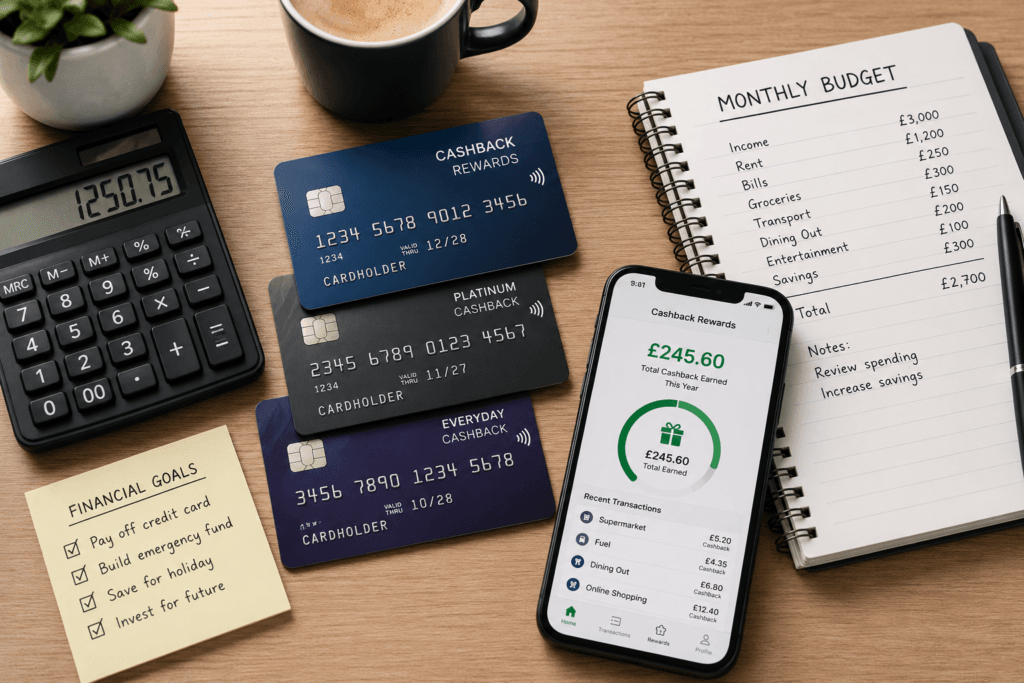
A professional finance image illustrating credit score improvement in the UK. The image represents responsible borrowing, credit report monitoring, debt management, and financial planning strategies to help consumers improve their credit rating.
Practical strategies to improve your credit score and build a stronger financial profile in the UK.
TABLE OF CONTENTS
Table of Contents
Introduction
Your credit score is one of the most powerful numbers in your financial life — yet most people in the UK have never checked it, let alone understood what drives it up or pulls it down.
Thank you for reading this post, don't forget to subscribe!
Whether you’ve been declined for a mortgage, turned down for a credit card, or simply want to make yourself more attractive to lenders, knowing how to improve your credit score fast in the UK is an essential skill. The good news? You don’t need to wait years to see results. With the right actions, some people see measurable improvements within 30 to 90 days.
This guide cuts through the noise. No generic advice, no recycled tips — just clear, actionable steps rooted in how UK credit scoring actually works, tailored to the realities of British financial life in 2024.
Key Takeaways
Register on the Electoral Roll immediately — it’s one of the fastest wins available.
Check your credit report across all three major UK agencies: Experian, Equifax, and TransUnion.
Reducing your credit utilisation ratio below 30% can boost your score noticeably.
Paying every bill on time, every month, is the single biggest factor in your credit score.
Avoid making multiple credit applications in a short period — each one leaves a mark.
Even small errors on your credit file can drag your score down — dispute them promptly.
Building credit history takes time, but certain products (like credit builder cards) can accelerate the process.
What Is a Credit Score and Why Does It Matter in the UK?
Before diving into the tactics, it helps to understand what a credit score actually is and how the UK system works — because it differs from the US model most people are familiar with.
In the UK, there is no single universal credit score. Instead, each of the three main credit reference agencies — Experian, Equifax, and TransUnion — holds its own file on you and uses its own scoring system.
Agency
Score Range
Good Score
Excellent Score
Experian
0 – 999
881 – 960
961 – 999
Equifax
0 – 1,000
531 – 670
811 – 1,000
TransUnion
0 – 710
566 – 603
628 – 710
Lenders use one or more of these reports — along with their own internal criteria — when deciding whether to approve you for credit and at what interest rate. A higher score typically means access to better rates on mortgages, personal loans, and credit cards, potentially saving you thousands of pounds over time.
How to Improve Your Credit Score Fast in the UK
1. Register on the Electoral Roll
This is the single fastest thing you can do. Lenders use the Electoral Roll to verify your identity and confirm where you live. Not being registered is a red flag — even if everything else on your file is spotless.
Register at gov.uk/register-to-vote. It takes less than five minutes. If you’re not eligible to vote (for example, you’re a non-UK national), some agencies will accept a written confirmation of your address from your local council.
Effect on score: Often visible within one to two billing cycles.
2. Check Your Credit Reports for Errors — and Dispute Them
Research suggests that a significant number of credit files contain errors. Even a small mistake — a wrong address, an account that isn’t yours, or a missed payment that was actually made on time — can suppress your score unfairly.
You’re legally entitled to a free statutory credit report from each of the three agencies under UK law. However, the free services offered by these agencies (such as Experian’s free monthly score, ClearScore for Equifax data, and Credit Karma for TransUnion data) give you more frequent access.
What to look for:
Accounts you don’t recognise (possible fraud or identity theft)
Incorrect personal details (old addresses, misspelled name)
Payments marked as missed when you paid on time
Accounts still showing as open when they were closed
Defaults or CCJs that don’t belong to you
If you spot an error, raise a dispute directly with the relevant credit reference agency. They are required to investigate and respond within 28 days. You can also add a Notice of Correction — a short statement explaining any unusual circumstances — which lenders must take into account when reviewing your file.
Tip: Check your report with all three agencies, not just one. Lenders use different agencies, so an error with Equifax might not show on your Experian file.
3. Pay Every Bill on Time — Without Exception
Payment history is the most heavily weighted factor in your credit score. A single missed payment can remain on your file for six years and cause an immediate, significant drop.
The solution is simple, though the discipline matters: set up direct debits for all recurring payments. This includes credit cards, loans, utility bills, mobile phone contracts, and even subscription services that report to credit agencies.
If you’ve missed payments in the past, the damage fades over time — but new, on-time payments actively rebuild trust with lenders. Consistency is everything here.
Practical steps:
List every monthly financial commitment.
Set up a direct debit for the minimum payment on any credit cards (then pay more manually if you can).
Set calendar reminders for any bills not covered by direct debit.
Link your current account to a budgeting tool or app to spot any upcoming shortfalls.
(For more on managing your monthly outgoings, see our guide to budgeting basics for UK households.)
4. Reduce Your Credit Utilisation Ratio
Your credit utilisation ratio is the percentage of your available credit that you’re currently using. If you have a credit card limit of £5,000 and you’re using £4,000 of it, your utilisation is 80% — which signals financial stress to lenders.
Most experts recommend staying below 30%, and ideally below 20%, for the best impact on your score.
How to reduce utilisation:
Pay down existing balances as aggressively as possible.
Request a credit limit increase (without spending more).
Spread spending across multiple cards to lower utilisation on each.
Time your payments so your balance is lower when your statement is generated — that’s the figure that gets reported.
Example: Sarah has two credit cards. Card A has a £3,000 limit with £2,700 outstanding (90% utilisation). Card B has a £2,000 limit with £0 balance. Her overall utilisation is 54%. By shifting £600 to Card B and reducing Card A’s balance, she can bring overall utilisation down to around 30% — without paying off any extra debt overall.
5. Build a Credit History If You Have Little or None
If you’re new to the UK, a student, or someone who’s always paid in cash, you may have what’s called a thin credit file — there simply isn’t enough information for lenders to make a decision.
This can be just as much a problem as bad credit. Here’s how to build history from scratch:
Credit builder credit cards are designed for this exact situation. They typically have low credit limits and higher interest rates, but used responsibly — spending a small amount each month and paying it off in full — they establish a track record. Providers such as Aqua, Vanquis, and Capital One (UK) offer these products.
Credit builder loans are another option. Some credit unions and specialist lenders offer small loans specifically to help people build credit history.
Reporting rent payments is a newer but growing option in the UK. Services like CreditLadder and Canopy report your rental payments to credit agencies, meaning your consistent rent history actually works in your favour. Previously, rent was largely invisible to lenders.
(Interested in credit builder cards? See our comparison of the best credit cards for bad credit in the UK.)
6. Avoid Multiple Credit Applications in a Short Period
Every time you apply for credit — whether it’s a credit card, loan, mortgage, or even a mobile phone contract — the lender typically performs a hard search on your credit file. This search is recorded and visible to other lenders.
Multiple hard searches within a short window suggest to lenders that you may be in financial difficulty or desperately seeking credit, which can lower your score.
What to do instead:
Use eligibility checkers before applying — these use soft searches that don’t affect your score. Most major UK banks and comparison sites (such as MoneySuperMarket and Compare the Market) offer these.
Space out applications where possible.
If you’re rate-shopping for a mortgage or loan, do it within a condensed period — some agencies treat multiple similar searches close together as a single enquiry.
7. Close Unused Credit Accounts — Carefully
You might think closing old accounts shows fiscal responsibility. In reality, it can sometimes backfire.
Closing a long-standing account reduces your overall available credit, which increases your utilisation ratio. It may also shorten your average credit history length — another factor in your score.
That said, if an unused account has an annual fee, or is linked to a joint account with someone who has poor credit, closing it makes sense.
The rule of thumb: Keep old accounts open if they’re fee-free and you’re not tempted to run up debt on them. Inactivity won’t harm your score, but losing the available credit limit might.
8. Remove Yourself from a Financial Association With Someone Else
When you share a joint account, joint mortgage, or joint loan with another person, your credit files become financially linked. This means their credit history can affect yours — and vice versa.
If you’ve separated from a partner, paid off a joint loan, or closed a shared account, you can apply to have the financial association removed by submitting a notice of disassociation to the relevant credit reference agencies.
Until that link is removed, a former partner’s poor credit behaviour can continue to drag your score down — even years later.
9. Use a Credit-Building Savings Account or Secured Card
If your credit history is very limited, some financial products are specifically designed to help you build a score while also saving money.
Credit union savings accounts often come with linked small loans that help you build history while putting money aside. The Money and Pensions Service (MoneyHelper) has a useful tool to help you find a local credit union: moneyhelper.org.uk.
(Looking to grow your savings at the same time? Read our guide to the best savings accounts in the UK.)
Practical Examples: Real-Life Scenarios
Scenario 1: New to the UK (No Credit History)
Priya moved from India to work in London. Despite having a high-paying job and savings, she was rejected for a credit card because she had no UK credit history.
What she did:
Registered on the Electoral Roll at her new address.
Opened a credit builder credit card with a £500 limit.
Used it only for her monthly grocery shop (around £150/month).
Set up a direct debit to pay the full balance each month.
Signed up with CreditLadder to have her rent payments reported.
Result: Within six months, her Experian score moved from 0 to 721 — enough to qualify for a mainstream credit card.
Scenario 2: Recovering from Missed Payments
James went through a difficult period two years ago — he missed three credit card payments and had a default registered. His credit score was 420 on Experian.
What he did:
Checked all three credit reports and found one error (a payment marked as missed that he could prove was made on time). He raised a dispute and had it corrected.
Set up direct debits for all bills going forward.
Reduced his credit card utilisation from 85% to 22% over eight months by paying down balances.
Avoided all new credit applications for 12 months.
Result: His score climbed to 680 over 14 months — qualifying him for a better-rate personal loan to consolidate remaining debt.
Common Credit Score Mistakes to Avoid
Applying for Credit You Don’t Need
Every application leaves a mark. Avoid the temptation to apply for store cards at checkout, or to accept pre-approved offers without checking the impact first.
Only Making Minimum Payments
Minimum payments keep your account in good standing, but carrying a large balance still affects your utilisation ratio. Pay more than the minimum whenever possible.
Ignoring Your Credit Report
Many people only look at their credit score when they’re about to apply for something important. Checking regularly — at least every three months — means you can catch errors or signs of fraud early.
Closing Your Oldest Credit Account
Age of credit history matters. Closing your oldest card might remove years of positive payment history from your file.
Using Payday Loans
Even if repaid on time, some lenders view payday loan usage very negatively — it signals financial stress. Avoid them wherever possible. If you need short-term borrowing, consider a 0% purchase credit card or an authorised overdraft instead.
(If you’re building an emergency fund to avoid relying on payday loans, read our guide to starting an emergency fund in the UK.)
Frequently Asked Questions
How long does it take to improve your credit score in the UK?
It depends on your starting point and the actions you take. Simple fixes — like registering on the Electoral Roll or disputing an error — can show results within 30 to 60 days. Rebuilding from a default or CCJ typically takes 12 to 24 months of consistent, positive behaviour.
Does checking my own credit score lower it?
No. When you check your own credit score or report, it creates a soft search, which is only visible to you. Only hard searches (triggered by credit applications) affect your score.
Will closing a credit card hurt my score?
It can. Closing a card reduces your total available credit, which increases your utilisation ratio. It may also shorten your credit history. Unless there’s a specific reason to close the account, consider leaving it open and inactive.
Do utility bills affect my credit score in the UK?
Yes, but with nuance. Utility bills (gas, electricity, broadband) are generally not reported to credit agencies unless you miss payments — in which case defaults can appear on your file. Some newer services allow you to voluntarily report utility payments to boost your score.
Can I improve my credit score if I have a CCJ?
A County Court Judgement (CCJ) stays on your credit file for six years. However, if you pay the full amount within one month of the judgement, you can apply to have it “satisfied” — which is still visible but viewed more favourably by lenders. After six years, it drops off completely, and consistent positive behaviour beforehand will still strengthen your profile.
What is a good credit score in the UK?
It depends on the agency. For Experian (the most widely used by UK lenders), a score of 881 or above is considered “good”, with 961–999 being “excellent”. For Equifax, 531–670 is good. For TransUnion, 566–603 is good. Always check which agency a lender uses before comparing scores.
Do I need to pay for credit monitoring in the UK?
No. You can access your credit report for free from all three agencies. Experian offers a free monthly score; ClearScore provides free Equifax data; Credit Karma gives free TransUnion access. Paid plans offer more frequent updates and added features, but free access is sufficient for most people.
Does a salary increase improve my credit score?
Not directly. Credit scores are based on credit behaviour, not income. However, a higher income may help you reduce balances faster and manage repayments more reliably — which indirectly benefits your score over time.
Conclusion
Knowing how to improve your credit score fast in the UK is about taking deliberate, consistent action — not hoping things improve on their own. The UK credit system rewards reliability, responsibility, and longevity. The steps outlined in this guide aren’t complicated, but they do require commitment.
Start with the quick wins: register on the Electoral Roll, check all three credit reports for errors, and set up direct debits so no payment is ever missed again. Then work on the medium-term levers — bringing down your utilisation ratio, building credit history through appropriate products, and avoiding unnecessary applications.
Every positive step you take is recorded. Every on-time payment chips away at a difficult past. And every month you manage your finances well brings you closer to the score — and the financial opportunities — you deserve.
Final Actionable Tips
This week: Register on the Electoral Roll at gov.uk. Check your credit reports with Experian, ClearScore, and Credit Karma.
This month: Set up direct debits for every regular bill. Calculate your credit utilisation ratio and make a plan to reduce it.
Over the next three months: Dispute any errors on your credit file. Consider a credit builder card if you have limited history. Begin tracking your score monthly.
Over the next six to twelve months: Maintain consistent on-time payments. Avoid new credit applications unless necessary. Watch your score rise steadily.
Small actions, done consistently, create significant results. Start today.
Opportunities
The following related articles would make natural internal links within this content:
To provide the best experiences, we use technologies like cookies to store and/or access device information. Consenting to these technologies will allow us to process data such as browsing behavior or unique IDs on this site. Not consenting or withdrawing consent, may adversely affect certain features and functions.
Functional
Always active
The technical storage or access is strictly necessary for the legitimate purpose of enabling the use of a specific service explicitly requested by the subscriber or user, or for the sole purpose of carrying out the transmission of a communication over an electronic communications network.
Preferences
The technical storage or access is necessary for the legitimate purpose of storing preferences that are not requested by the subscriber or user.
Statistics
The technical storage or access that is used exclusively for statistical purposes.The technical storage or access that is used exclusively for anonymous statistical purposes. Without a subpoena, voluntary compliance on the part of your Internet Service Provider, or additional records from a third party, information stored or retrieved for this purpose alone cannot usually be used to identify you.
Marketing
The technical storage or access is required to create user profiles to send advertising, or to track the user on a website or across several websites for similar marketing purposes.